måndag 28 november 2011

The Pacific Ocean, a climate factory

All three oceans, Pacific, Atlantic and Indian Ocean do all impact on the climate regionally, but I wonder if there are any other ocean than the Pacific which is shown to also have a global impact on our climate!?

In every newspaper with any self esteem, we read in the days of). The former has in all cases I have known for a long time, but La Niña is for me a new acquaintance.

I intend to devote the next posts to write a little about water and air flows mainly in the Pacific Ocean. Because it fascinated me so much to dig into those issues and I hope it will interest others as well. A lot is perhaps remnants for most, but I write about it anyway!

To begin with, this primarily concerns the area around the equator and southwards. We will familiarize ourselves with the concepts of the two children El Niño (man child) and La Niña (girl), the Humbolt current, Equatorial Currents, Walker Circulation, Madden-Julian Oscillation, etc., etc..

fredag 21 oktober 2011

Do sharks feed on fossil fuels?

Revolutionary new research shows that sharks and rays lay their eggs in warm deep see Methane seeps where volcanic activity heats the water and creates a full-fledged food chain.
It is nothing new in itself that life thrives around deep-sea volcanoes, far away from sunlight and photosynthesis.
An eco system of its own is created where bacteria nourishes on methane and sulphur instead of oxygen and sunlight. Clams and worms feed on bacteria and the question is whether the juvenile sharks and rocks make it too?
For us humans, this is big news. That there would be animals high up the food chain that partly feed in a system that is not driven by photosynthesis. Strange.
For sharks and rays, this is however no news. Palaeontologists have found fossils from tapeworms that lived in similar underwater volcanoes and have also found the fossil shark eggs there too. At least 200 million years old.
As a human being, you may well feel a bit paltry facing these numbers
It certainly is amazing!?

onsdag 3 augusti 2011

Water is a marvellous thing

Water is, as you know the prerequisite for life on Earth. Or rather, the Earth's life forms have arisen mainly due to the unique characteristics of water. On other planets with different conditions, there may of course exist completely different forms of life. Who knows?


Water is not like many of our other elements. The solid state of water has a greater volume and lower density than its liquid form. The density is highest in the liquid state at +4 degrees Celsius.

This strange fact that the density is highest in the liquid state makes the ice float on the water, and the water around the polar areas does not bottom freeze. Along the bottom, the water is +4 degrees Celsius and the biological activity does not stop. This means that a big range of aquatic animals can find some food during the winter, which would have been impossible if the ground was covered with ice

torsdag 23 juni 2011

Why do the leaves fall off in the autumn? Part III

For all leaf-bearing trees and bushes, it is therefore better to let these cells shrivel up and put energy on creating new leaf rudiments and empty as much water as possible to prevent frostbite and cell burst. In areas on earth where there is no risk of frost, the leaf-bearing plants are green year round. They even manage a few nights of frost and a total loss of foliage, but would the cold period hold for longer cells would burst and kill the plant

tisdag 21 juni 2011

Why do the leaves fall off in the autumn? Part II

Despite all the rain- and snowfall, the winter is a relatively dry season with cold dry air. It actually works to dry laundry outdoors cold, clear winter days. The water freezes in the garment and then evaporates without passing through the liquid state. We have, in other words, a fairly high vapor pressure on the garment surface and the same would apply to the leaves. The tree would have a hard time trying to retain moisture and at the same time not able to take up new liquid (the ground's frozen) with dehydration as a result.

onsdag 15 juni 2011

Who do the leaves fall off in the autumn? Part I

OK it is summer on the norhern hemisphere and one should maybe not think so much about autumn and winter, but newertheless her comes some thoughts:

With water-filled leaves left on the tree, would first of all the cells burst as the water expands when it freezes. The trees could protect themselves by producing/store lots of sugar in the leaves during the early fall to get a high sugar content in the cells.


This would work like glycol in the coolant/antifreeze and provide some protection. To produce this sugar is obviously more dangerous and energy consuming than to simply turn off all cell functions in the leaves and let them fall off.

måndag 30 maj 2011

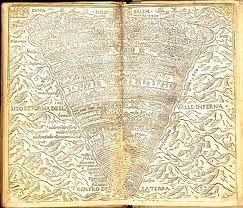
Aldus Manutius first to print Dante's Divine Comedy

It is rather strange that when you start digging into something, there are endless things to learn. I first wrote about Aldus Manutius because I thought it was a bit hilarious that there was a specific person who invented the semicolon, today appearing as smileys in so many SMS-messages. As I dig further, it turns out that this man must have been one of his times greatest entrepreneurs and visionaries.

Aldus Manutius who was active in Vendig in the late 1400s and ran one of those days largest printing works. Not only has he printed texts from his own era, but he converted many ancient handwritten parchment works into printed books.


Among other things, it was Manutius who first printed Dante's Divine Comedy and a number of works by Aristotle, Aristophanes, Euripides and Plato. I wonder if he had any idea of the long lasting greatness of these works? And that they, to some extent still influence a lot of art and literature 500 years later?